


Carney Rules Out China Trade Deal Over Tariff Threat
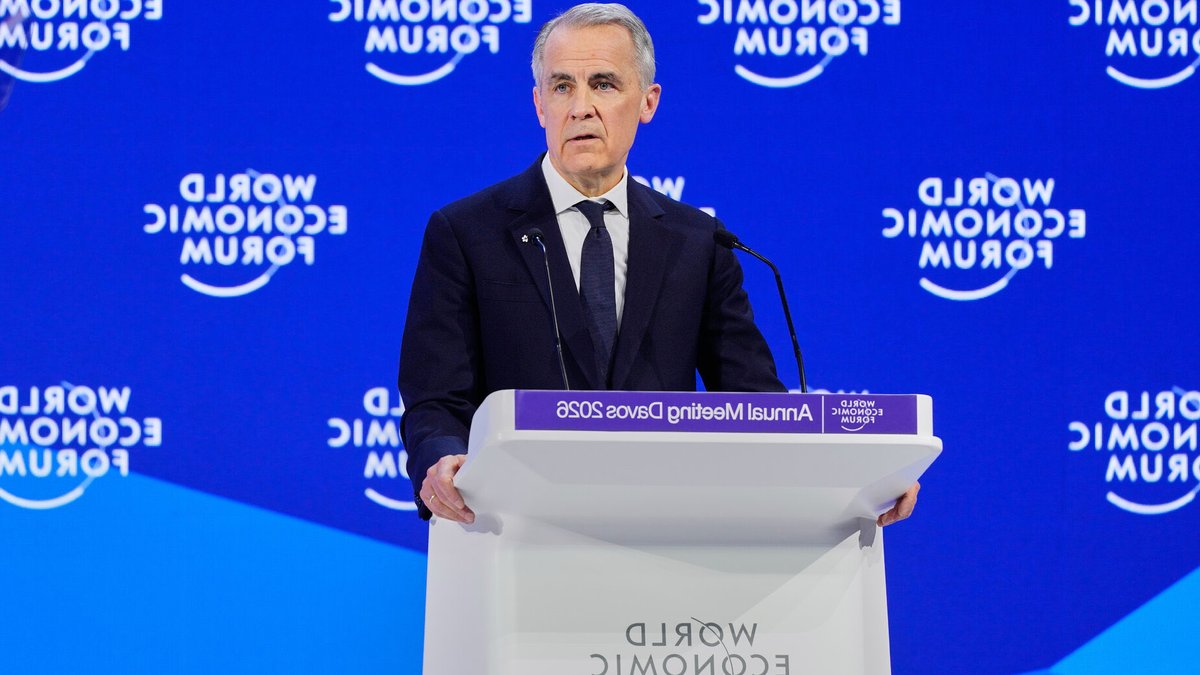
Please note that we are not authorised to provide any investment advice. The content on this page is for information purposes only. Canadian Prime Minister Mark Carney clarified that the country has “no intention” of pursuing a formal free trade agreement (FTA) with China, moving to de-escalate a burgeoning trade war with Washington. The statement follows a weekend of sharp warnings from US President Donald Trump, who threatened to impose a 100% tariff on all Canadian goods if Ottawa deepened its economic ties with Beijing.
Canada Rules Out Free Trade Deal With China
Speaking to reporters in Ottawa, Carney emphasized that recent negotiations with China were narrow in scope, intended only to “rectify issues” from the past two years rather than establish a full trade pact. The tension stems from a trade arrangement concluded on January 16, 2026, during Carney’s visit to Beijing. The deal was designed to ease a cycle of retaliatory measures that began in 2024.
Related: Mistakes to Avoid with Rental Properties
Key terms of the agreement include:
- EV Import Cap: Canada will allow 49,000 Chinese electric vehicles annually at a significantly reduced tariff of 6.1% (down from 100%). Lowering the barrier for entry-level EVs is seen as essential for meeting national emissions targets, as high costs remain the primary hurdle for Canadian EV adoption.
- Agricultural Relief: In exchange, China will lower tariffs on Canadian canola seed oil (from 85% to 15%) and exempt products like lobster, beef, and hay from anti-discrimination duties through 2026.
- Investment: China is expected to begin investing in the Canadian automotive sector within the next three years.
Prime Minister Carney characterized the deal as a “reversal toward predictability” in response to an increasingly volatile trade relationship with the United States. Responding to a question on whether China has been a reliable partner compared to the US, Carney said, “In terms of the way our relationship has progressed in recent months with China, it is more predictable, and you see results coming from that.”
Related: Why are man made diamonds the way forward?
Trump’s Reaction: “The 51st State” Rhetoric
President Trump reacted aggressively to Canada opening up its economy to China, taking to social media to accuse Carney of attempting to turn Canada into a “Drop Off Port” for Chinese goods to bypass U.S. trade barriers. “If Canada makes a deal with China, it will immediately be hit with a 100% Tariff against all Canadian goods and products coming into the U.S.A.,” Trump posted on Truth Social. The President further suggested that Canada was “systematically destroying itself” and even quipped about the country being absorbed into the U.S., a recurring theme in his recent rhetoric regarding Canadian sovereignty.
The trade spat is the latest chapter in a strained relationship between the two leaders. Relations soured further last week following Carney’s speech at the World Economic Forum in Davos, where he warned against “economic coercion” by great powers, a comment widely interpreted as a critique of Trump’s “America First” policies and his recent interest in acquiring Greenland.
Related: Shaping the Future of Healthcare
USMCA Virtually Blocks Member States From Signing Free Trade Deals With China
Notably, Article 32.10 of the USMCA (United States-Mexico-Canada Agreement), often called the “China Clause” or the “Poison Pill” provision, essentially gives the three member nations a “veto” over each other’s ability to sign trade deals with countries they don’t consider “market economies.” Under this rule, if Canada, Mexico, or the U.S. wants to start trade talks with a “non-market economy” (a term directed almost exclusively at China), they must follow a strict set of rules.
They must notify the other two partners at least 3 months before even starting negotiations. They must provide the other partners with as much information as possible about the potential deal’s objectives. No later than 30 days before signing, they must provide the full text of the agreement for the other USMCA members to review. Importantly, if one partner signs a deal with a non-market economy, the other two can terminate the USMCA with six months’ notice and replace it with a bilateral agreement between themselves.

Mistakes to Avoid with Rental Properties


