


AI Fuels Stock Market Bubble Fears
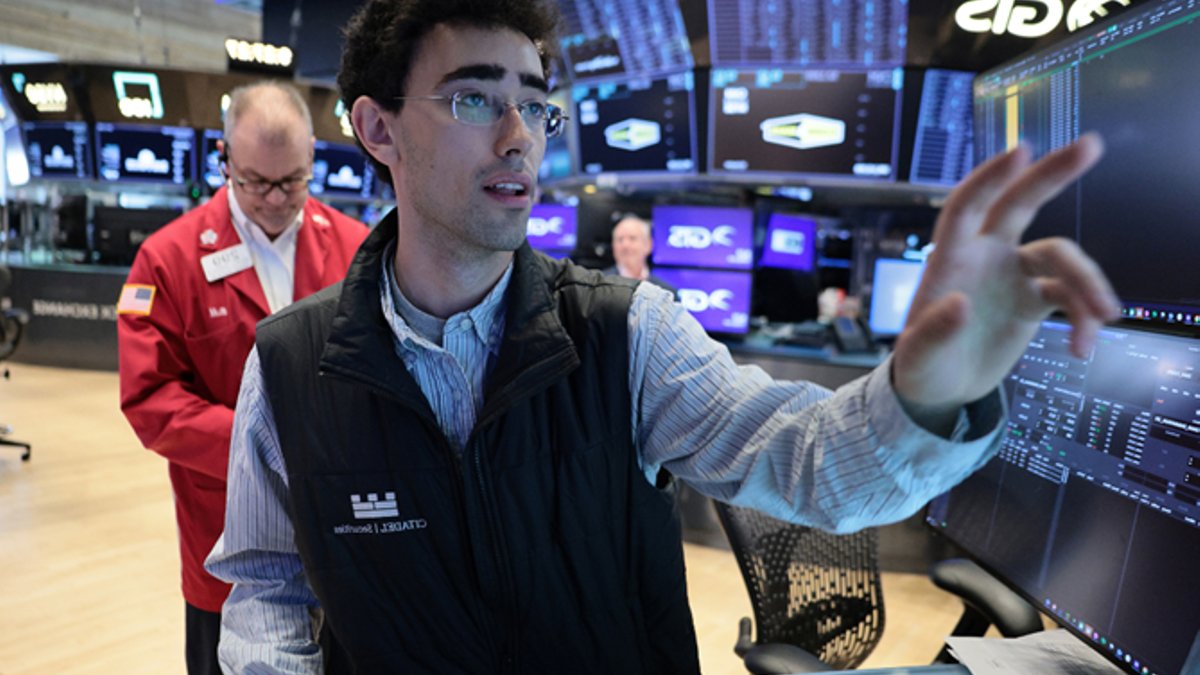
The recent plunge in technology equities, triggered by a stronger‑than‑expected U.S. jobs report that may keep interest rates high, has revived concerns about whether AI‑related stocks are in a bubble.
Market performance and the AI hype
Over the past five years the S&P 500 has climbed roughly 80%, while the Nasdaq has risen about 96%. Within the S&P, 41 AI‑linked companies now represent nearly half of the index’s market value, a share that highlights the sector’s outsized influence.
Investors have poured money into firms that produce chips, data‑centre capacity, and software needed for generative AI. The surge has drawn comparisons to the late‑1990s dot‑com boom, prompting analysts to note that valuations may have outpaced underlying earnings.
Three high‑profile IPOs—SpaceX’s recent integration with xAI, Anthropic, and OpenAI—are being watched as barometers of appetite for AI ventures. Their market debuts could signal whether capital continues to chase the technology or begins to pull back.
Related: Hidden AI risks hit company budgets
Expert views on valuation risk
Keyvan Vakili, an associate professor at London Business School, notes that the “key distinction is between the technology and the share prices.” He argues that while AI’s transformative potential is “largely settled,” the current pricing “embeds vast future productivity gains” that may take years to materialise. Vakili warns that “delayed, contested returns set against front‑loaded valuations make a correction quite plausible,” especially as many of the gains depend on deep organisational changes.
Alex Stremme of Warwick Business School says that defining a bubble is inherently speculative. He points out that quantifying AI’s “true” value would require measuring long‑term societal impacts, a task he deems “nigh‑on impossible.” The professor adds that heightened geopolitical and environmental uncertainty further clouds any attempt to gauge whether premiums are justified.
Dan Buckley, chief analyst at DayTrading.com, calls the AI market “largely in a bubble,” citing “circular capex deals” where firms invest in each other to prop up revenue. He likens the situation to the dot‑com era, noting that excessive funding for financially weak businesses can precipitate a collapse if financing tightens.
Mick McNeil, CEO of Deliverance AI, shifts the focus to timing, observing that while demand for AI is strong, “the infrastructure build‑out has moved faster than the software, governance and operating models needed to turn that capacity into business outcomes.” He cites SpaceX’s IPO as a marker of the market’s belief in a “multi‑trillion‑dollar AI opportunity,” while cautioning that the lag between infrastructure investment and enterprise adoption could leave some assets underutilised in the short term.
The broader economic backdrop—rising borrowing costs and potential energy price shocks—adds pressure on AI firms that rely heavily on data‑centre operations. Higher interest rates increase the cost of large loans these companies often take, while disruptions to energy supplies could raise operating expenses, tightening margins for firms that are not yet profitable.
Related: Former CEO recalls harsh business reality check
Carl Hazeley of Finimize argues that the “talk of an AI bubble misses the real timing issue.” He stresses that most organisations are still transitioning from pilot projects to production, meaning the sector’s true value will emerge as companies prove return on investment and integrate AI into core workflows.
Gonzalo Brujó, global CEO of Interbrand, suggests that rather than a bubble, investors should consider exposure risk. He advises building “a portfolio that’s resilient,” implying that diversified holdings can offset potential losses if valuations adjust.
Erich Sanchack of Salute warns that while the “underlying technologies are real,” higher rates and energy costs will “expose weaker business models.” He predicts a “significant imbalance between winners and losers,” with long‑term success hinging on brand strength and customer experience.
Finally, the CEO of Salute, Erich Sanchack, adds that the sector’s future depends on sustainable scaling. He notes that companies must secure power, cooling, and talent to avoid over‑extension, suggesting that a “correction from companies that initially over‑extended their AI investments” is more likely than a full‑scale crash.

Hidden AI risks hit company budgets


