


Fort McMurray Anticipates New Economic Boom Driven by Oil Demand
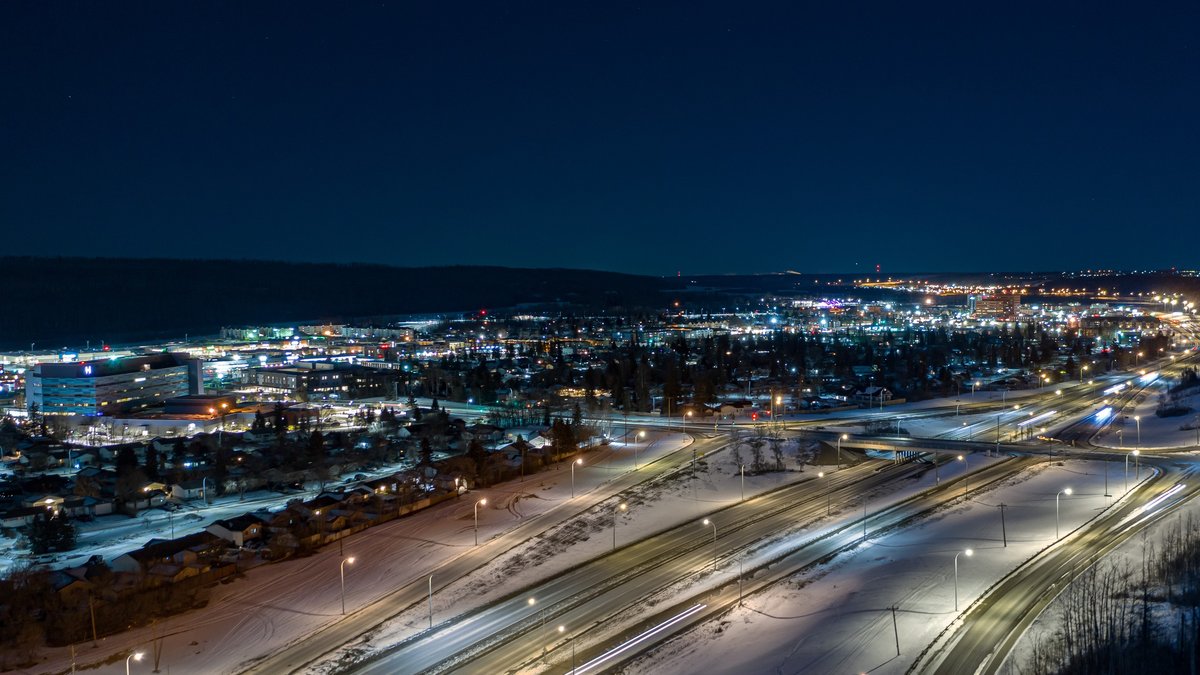
Jobs in Fort McMurray start early. At 6 a.m., the sky remains dark, and a local hotel’s dining area buzzes with activity. A television broadcasts the morning news as men sit separately, heads down, in bulky winter coats and safety vests, eating breakfast. At the coffee dispenser, one man fills a stainless steel to-go mug. Outside, the parking lot is packed with pickup trucks, their sides and tires caked with dirt. Finding a space the night before required several attempts.
Fort McMoney returns
These men are here for work, and the pay is why Fort McMurray earned the nickname Fort McMoney. Estella Petersen, one of those drawn by the wages, is candid about her reasons. “There’s no way I could make what I’m making anywhere in Canada other than up here,” she said. She estimates taxes take “like 37 per cent” of her income. “We pay a lot to live here, but we earn a lot, too.”
Petersen, standing at 5-foot-1, wears long beaded earrings that reach her mid-length brown hair. Like many in town, she is dressed entirely in denim, including a heavy jacket. She greets with a handshake and a warm smile, speaking softly.
As a dozer operator in the oilsands, a remote region in northern Alberta, Petersen has contributed to the wealth generated for her province, town, and family. Her machine towers over her when she stands beside it. Over coffee, she reflects on nearly 17 years of operating heavy equipment in Fort McMurray, enduring the last boom, the subsequent bust, and the fire that destroyed everything she owned. Now, she observes, “everyone seems to be revving up.”
Opportunity is the buzzword across this oil town. A young woman serving supper at a local restaurant moved from Kelowna, B.C., to pursue power engineering training, aiming for a six-figure salary. A coffee server at Tim Hortons, originally from Greece, sums up her reason for coming in one word: money.
Fort McMurray’s Economic Boom Fueled by Global Events
The college has wait lists, houses attract multiple offers, and more big box stores are on the horizon. Global events are aligning in Fort McMurray’s favor. The war in the Middle East disrupted oil flow through the Strait of Hormuz, and Ottawa and Alberta, typically at odds, have agreed on a new oil pipeline to the West Coast.
Petersen echoes this sentiment. “Everyone thinks this pipeline is going to go through. Everyone’s hiring people, like everything’s ramping up. And they think we’re going to have a bit of a boom here.”
On a mid-October Sunday, Highway 63, the main route into Fort McMurray, is quiet. The freshly paved road stretches under a clear blue sky, lined with pines and aspens. The last leaves have turned yellow, and many trees are bare. Charred trees from the fire still stand along the road, with small spruce growing among them. The highway descends steeply, revealing the town below, nestled in the valley beside the Athabasca River.
To a visitor, the fire’s scars remain visible. Petersen, however, sees it differently. “I was thinking it looks pretty good now,” she said, laughing.
The Beast: Fort McMurray’s 2016 Wildfire Devastation
Petersen lived through the fire. Darby Allen, the fire chief at the time, dubbed the inferno the Beast. On May 3, 2016, families hastily packed essentials, loaded pets and belongings into vehicles, and fled. As residents escaped down Highway 63, the only exit, flames engulfed the trees on both sides, and thick smoke turned the sky black.
Entire neighborhoods were reduced to rubble, as if hit by a tornado. Abandoned vehicles smoldered where they had been left. Over 88,000 people were displaced, and thousands lost their homes.
Petersen recalls being initially told not to worry, followed by the sudden evacuation order. “And then all of a sudden it’s like, get out.” She lost her home, escaping with only one backpack. Her motorcycle and all her possessions were gone, and she had no insurance on her belongings. Today, she owns two condos in Fort McMurray, with her son living in one.
Despite the fire’s devastation, Petersen feels at home in the town. “I just feel like it’s a great environment up here,” she said. “I really enjoy it up here. It does feel like home to me.”
In the hotel lobby, Petersen reflects on her life before Fort McMurray. She previously worked two and a half jobs, thinking, “Why am I killing myself doing this when my friends are working in Fort Mac, coming home and buying big-ticket items and stuff?”
Estella Petersen’s Journey to Fort McMurray
When she discussed moving to Fort McMurray with friends, some were skeptical. “Half of them said, no, you can’t come up there. You’re a female … You’re native; like, you won’t make it up there. And I was like, challenge accepted.”
Petersen’s roots are in Cowessess First Nation in southern Saskatchewan. She grew up between Manitoba and Alberta, facing racism and a challenging childhood in a small town.
Over the years, she worked as an armed guard for Brink’s, a probation officer, and a corrections officer. “I’ve always sought out jobs that are atypical of females.”
She pursued work in the northern oilsands, contacting at least 20 companies. Only one responded, training her on haul trucks but laying her off three weeks later along with many others. She quickly found another job and has remained in the industry ever since.
Petersen proved her friends wrong. For her, Fort McMurray is a place where an Indigenous woman can thrive. “I think the oilsands really accepts and encourages Indigenous business. I think here you see more affluent Indigenous people than you would, you know, in other parts of Canada. And for me, I feel welcome here.”
She challenges the notion that all Indigenous people oppose pipelines. “Well, no, we’re not, because … some of us have a lot of connection with the oilsands.” Some have called her colonized for her choices. “I just want a better life for myself and my kids … It doesn’t mean you have to leave your culture behind,” she said. “I think you can have both your culture and a well-paying job in the oilsands.”
Petersen spent the last decade rebuilding her life and now looks to the future. Her son has followed her into the oilsands, operating heavy equipment for a contractor and aiming to join one of the major companies. With increased hiring in town, she is optimistic about his prospects.
Keyano College: Training the Next Generation of Workers
At Keyano College’s entrance, the poles of a tipi frame stand on a lawn covered with fallen leaves, beneath nearly bare trees. In nêhiyawêwin, the Cree language, the name is kiyânaw, meaning “we, us, our.” The college began in 1965 in three ATCO trailers as the Alberta Vocational Centre. Today, it trains heavy equipment operators and welders and offers nursing and education degrees in partnership with universities.
Mark Dolmont, Keyano’s vice-president of academics, first came to Fort McMurray in the early 2000s, when fly-in workers were more prevalent. “You used to go to restaurants and have to wait forever, and people were throwing money,” he said. “You didn’t have that sense of community.” Over the past 20 years, he feels the town has grown closer.
He acknowledges the primary reason people move here. “Do I think a lot of people initially have come for money? Absolutely, and I think it’s just opportunity.” Keyano, once reliant on international students, now focuses more on locals to retain graduates in town. Mark Dolmont says, “If they’re from the community, they’re educated in the community, there’s a high chance they’re gonna stay in the community.”
Renie Dela Paz is the kind of student Keyano hopes to keep. He moved to Fort McMurray from the Philippines with his family in 2018, two years after the wildfire. After working, he enrolled in Keyano, graduating last year in hospitality management. Now in his first year of a governance and civil studies diploma, he serves as the student association president.
Many Keyano programs have wait lists. Beyond the trades, the college has increased its focus on healthcare, with nursing demand far exceeding available seats, according to Dolmont. The heavy equipment technician program has about 188 people waiting, and the steam fitter and welder program has 89. While he cannot confirm which companies hire the most graduates, Suncor Energy Inc. and Syncrude Canada Ltd. are likely the top employers, and much of the work ends up in the oilsands regardless of the company.
Local College Programs and Student Experiences
Keyano College plays a significant role in preparing students for local job opportunities.
Graduates often find employment with major companies like Suncor Energy Inc. and Syncrude Canada Ltd., with much of the work tied to the oilsands industry. This reflects the college’s focus on aligning programs with local economic needs.


