


Canada seeks deeper EU ties without joining
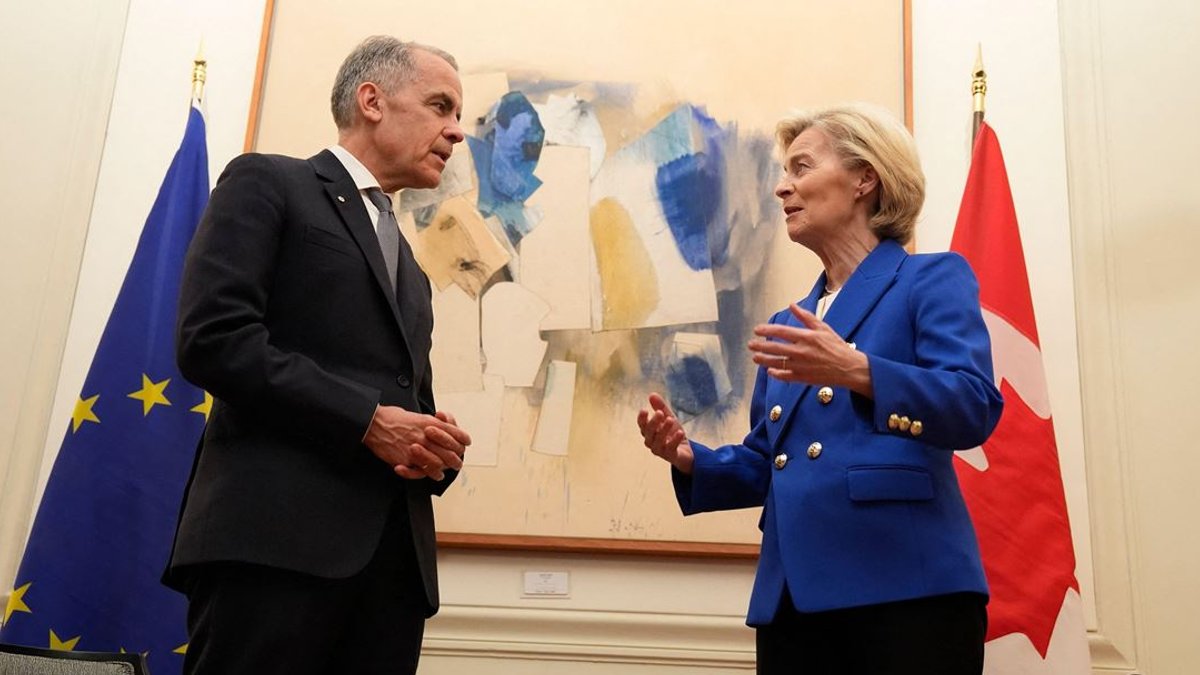
Prime Minister Mark Carney has dismissed the possibility of Canada joining the European Union, but his administration is now advocating for a different kind of alliance that could reshape the country’s economic and security relationships with Europe. During a speech last month, officials confirmed that talks with the EU would center on building a much stronger and deeper security and economic partnership rather than membership, putting an end to years of debate fueled by European politicians and public opinion polls showing support for closer ties.
The proposal for Canada to apply for EU membership gained momentum earlier this year after Finnish President Alexander Stubb and French Foreign Minister Jean-Noël Barrot publicly urged an accession bid. Polling on both continents indicated strong interest in exploring such a move, but Carney’s government has repeatedly rejected the idea. Last June, he stated clearly: “That’s not the pathway we’re on.” The European Commission has also shown no interest in initiating accession talks.
Instead, Canada and the EU are exploring a more flexible model: sector-specific integration without formal membership. This approach reflects growing concerns in Canada about overreliance on the U.S., where 76% of its foreign trade currently flows. Stéphane Dion, Canada’s former ambassador to Europe and a leading figure in trade policy, described the strategy as “diversification” and a “hedge against uncertainty” in a speech this spring. Even if successful, Europe would still not replace the U.S. as Canada’s primary trade partner. Dion estimated that diversification could reduce the American share to 50-60%, though that would still leave the relationship dominant.
Thomas Verellen, a professor of European law at Utrecht University, argues that Canada’s federal structure makes full EU membership unworkable. “Canada has a lot of what Europe needs, but in Europe there is not enough of an understanding of how decentralized Canada is,” he noted. The country’s provinces retain significant control over trade, agriculture, and energy—areas where EU centralization would create conflicts. For instance, French and Canadian dairy producers have long opposed free-trade deals that threaten their protected markets. Ratification of the Full Economic and Trade Agreement (CETA), signed in 2016, has stalled partly due to these agricultural disputes.
Defense and energy ties deepen first
Progress is already being made in areas where political hurdles are lower. In February, Canada became the first non-EU nation to join the bloc’s SAFE defense initiative, a security partnership focused on countering hybrid threats. A month later, it signed an agreement with the European Investment Bank to expand production of rare earth minerals, essential for green technology and military applications. In June, Canada also committed to purchasing submarines from a German defense contractor, further integrating its defense industry with Europe’s.
The most visible sign of this shift came this month, when the Canadian Broadcasting Corporation (CBC) upgraded its status with the European Broadcasters’ Union (EBU) from associate to full membership. This change formalizes collaboration on journalism standards, platform accountability, and content sharing—a rare instance of cultural alignment outside trade and security. “Members recognized the value that full [Canadian] Membership would bring to the Union, including stronger collaboration on trusted journalism, platform accountability and content exchange,” said EBU spokesperson Claire Rainford.
However, the Arctic remains a source of tension. While Canada and the EU share concerns about Russian influence in the region, Ottawa views much of the Arctic as its sovereign territory and has resisted EU efforts to expand its role there. In 2009, Canada blocked the EU from gaining a permanent seat on the Arctic Council over disputes about seal product trade restrictions. The two sides also disagree on whether the Northwest Passage should be treated as international waters—a position the EU supports but Canada rejects.
Related Post: New Trade Route Boosts Middle East Exports
This new partnership model also extends to critical infrastructure. In May, Canada and Germany finalized plans for a liquefied natural gas (LNG) export terminal on Canada’s Pacific coast, to be operated by the state-owned German energy company SEFE. The project aims to supply European markets as the continent reduces its dependence on Russian gas. Environmental groups have raised concerns about the terminal’s ecological impact, but the deal reflects broader efforts to align Canada’s energy exports with Europe’s security needs.
Collaboration in artificial intelligence and supply chain resilience is advancing as well. In April, Canada and the EU launched a joint task force to standardize data privacy regulations, building on existing frameworks under CETA. The initiative targets sectors like healthcare and finance, where cross-border data flows have historically faced regulatory barriers. Meanwhile, Ottawa and Brussels are exploring a “critical minerals alliance” to secure supply chains for electric vehicle batteries, with Canada positioning itself as a key supplier of lithium and cobalt.
Agriculture clashes stall deeper economic deals
Despite these advances, agriculture remains a persistent obstacle. French and Belgian farmers have repeatedly delayed CETA’s full ratification, fearing that Canadian dairy and poultry exports would undermine EU subsidies. In a recent letter to the European Commission, French agricultural unions warned that even partial liberalization under CETA could provoke protests similar to those seen during the 2012 anti-GMO demonstrations. Meanwhile, Canadian provinces like Quebec have resisted opening their protected dairy markets, citing constitutional agreements with Ottawa. These conflicts suggest that while sectoral cooperation may succeed in defense and minerals, agricultural trade will likely remain contentious.
The Arctic continues to be the most divisive issue in the Canada-EU relationship. Both sides share concerns about Russian influence in the region, but their approaches differ sharply. Canada insists the Northwest Passage is internal waters, a stance reinforced by its 2019 Arctic sovereignty law. The EU, however, argues the passage should be classified as international waters under the United Nations Convention on the Law of the Sea. The disagreement resurfaced in June when the EU’s Arctic envoy called for “greater international collaboration” in the region—a statement Canada interpreted as a challenge to its territorial claims. With Russia expanding its military presence in the Arctic, the two sides have yet to reconcile their competing visions for the region’s governance.
New model could reshape global alliances
Canada’s government has identified several areas for closer cooperation with the European Union beyond trade, including security and defense, economic resilience, critical minerals, artificial intelligence, supply chain stability, and energy security. Officials have emphasized the potential for joint efforts in these sectors, with support for Ukraine also highlighted as a shared priority, suggesting alignment in foreign policy objectives.
The proposed framework would allow Canada to engage with the EU on specific policy areas without seeking full membership. This approach addresses concerns about conflicting provincial authority, particularly in agriculture and energy, where EU regulations could clash with Canadian protections. The model could serve as a precedent for other democracies seeking deeper ties with Europe while maintaining autonomy.
Europe’s interest in formalizing this partnership extends beyond bilateral gains, as it could position the EU as a hub for smaller and middle-power democracies. Success in structuring this relationship could influence how other nations interact with the bloc, reducing reliance on the U.S., China, or Russia. The EU’s willingness to adapt its partnership model may depend on Canada’s ability to demonstrate its effectiveness in practice.

Ramp Expands to United Kingdom Market


