


Sixties sparked management revolution
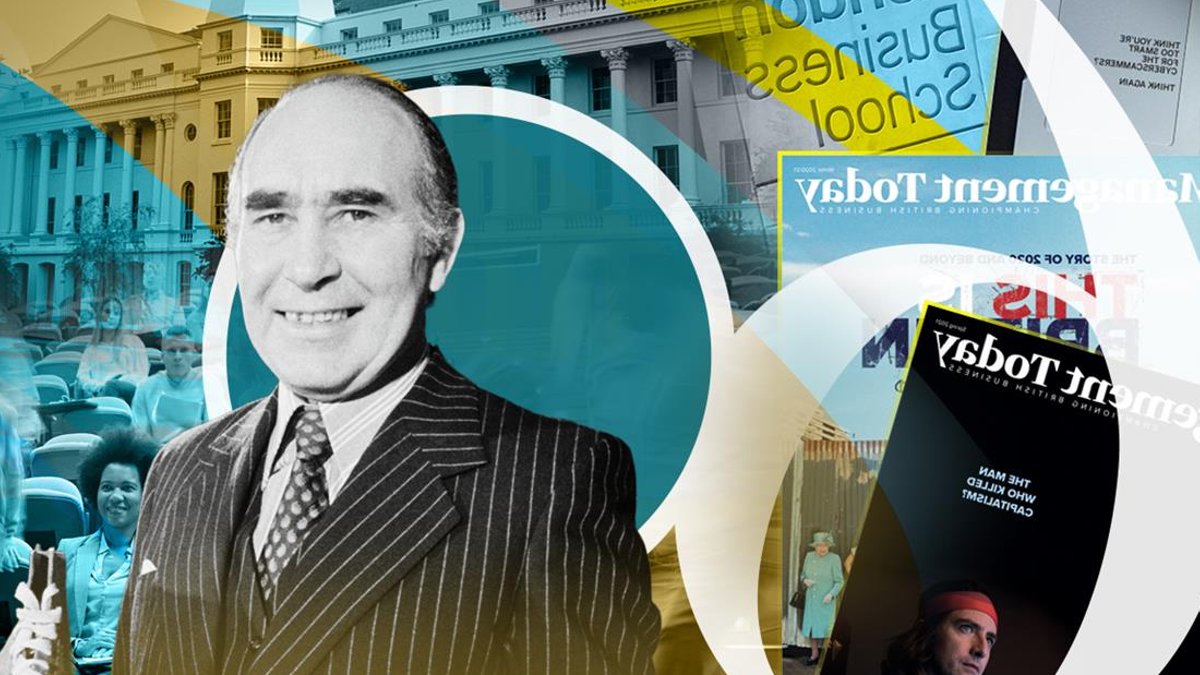
1966 is often remembered for Beatlemania, the rise of supermodel Twiggy and Geoff Hurst’s World Cup hat‑trick, but it also marked an early shift in British management thinking.
Business schools emerge amid economic uncertainty
London Business School opened in 1964 and Manchester Business School followed in 1965, both created after the 1963 Franks report called for a “professionalising” of management. That same year, Management Today began publication under Robert Heller. These initiatives appeared against a backdrop of uneven growth—GDP rose close to 6 % in 1964 but slipped to about 1.5 % in 1966—fueling concerns that the British economy lagged behind rivals.
Harold Wilson’s 1963 Labour conference speech warned that Britain risked falling behind in a “white‑heat” technological revolution. When he became prime minister in 1964, he promised modernisation and merit‑based advancement, rejecting the notion that industry should be run solely by aristocratic connections. His remarks likened the persistence of “gentlemen in a world of players” to outdated military commissions.
From snobbery to a recognised discipline
At the time, learning about business was often dismissed as “trade” rather than a proper academic subject. Historian Mitchell J. Larson notes that the new schools helped legitimize management as a profession, though the change was gradual. By 1985, a survey by the British Institute of Management recorded postgraduate management qualifications offered by 47 institutions, yet Charles Handy still observed that education remained “too little, too late for too few.”
Peter Miskell points out that the rise of corporate raiders in the 1970s and 1980s, such as Jim Slater and Jimmy Goldsmith, shifted focus toward shareholder value and shorter CEO tenures. Earlier “gentleman amateurs” often served long terms, viewing themselves as custodians of the organisation.
Industry composition also evolved. Manufacturing dominated employment in the sixties, while later decades saw growth in creative and financial services. This shift prompted a rethink of leadership style: managing talent in film or publishing required more than strict directives, encouraging empathy and inclusivity—concepts absent from the 1960s lexicon.
Organisational culture, now a staple of leadership discussions, did not emerge as a term until the 1980s or 1990s, according to Michael Rowlinson. Likewise, Stephanie Decker highlights that workforce mobility has increased; staying with a single employer was once the norm, whereas today employees expect exit options and negotiate terms more freely.
John Amaechi’s analysis of a decade‑long shift reveals a move from transactional slogans to messaging that emphasizes employee wellbeing, especially during the pandemic. He warns that this focus may be receding under US‑influenced pressure, and notes that many managers still rise solely on technical expertise, becoming what the Chartered Management Institute calls “accidental managers.”

AI demand fuels consulting growth by 2026


