


Dr Alice Bunn Leads UK Space Industry
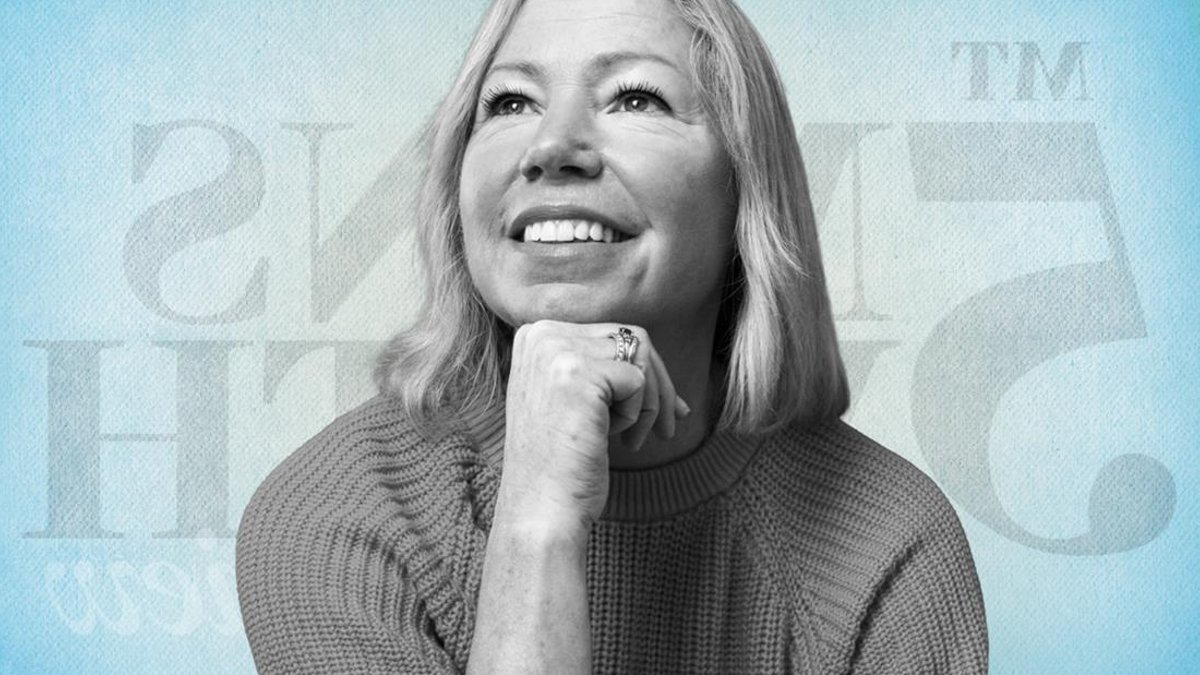
“Space, it feels so distant from our daily lives…But in many ways it’s much closer than we might think.” In its #ThanksSpace campaign, the UK industry’s trade association sums up the contradictions in our relationship with space. We associate it with grand endeavour but many of its impacts are felt in the minutiae of our everyday lives. We tend to hone in on the quest to uncover the secrets of the universe, but it is as a vantage point to observe our own planet that space could play a critical role in our survival as a species. As Dr Alice Bunn explains: “Half of the essential climate variables [the variables that critically contribute to the characterisation of Earth’s climate] can only be measured from space…So the power of space, not for looking out, but for looking down, is not to be understated.”Bunn has a clearer picture than most of the intrinsic importance of space to our daily lives. As the president of UKspace and the former international director of the UK Space Agency, she is a longtime advocate for the sector. A chartered engineer with 25 years’ experience in the space industry, Bunn has held leading roles in areas spanning Earth observation strategy, the security of the UK sector, public engagement initiatives, and international disaster response coordination via the sharing of satellite imagery.Why is it so important that the UK is an influential player in the global space industry? It’s so important because all of our everyday lives depend on space technology. It’s estimated that in the UK alone, losing access to space would mean losing around a billion pounds per day. And that’s not an unrealistic scenario when you see how powers around the world are controlling space and using space infrastructure for both their civil and defence needs.There’s an unconscious bias that when people think of space, they always default to thinking of it as a scientific endeavour. And the reality is, government departments such as the MOD, Foreign Office, DESNZ, the Department for Culture, Media and Sport, and Defra all arguably have a much bigger stake in space capability in the future than our scientific endeavour. The scientific endeavour is always fundamentally important, not least because we see new innovation coming from that investment in science, but we do have a bias not to recognise the extent to which all of our wider lives are powered by space technology.People talk about space as being the site of the next industrial revolution. Why? The next industrial revolution is absolutely going to be happening in space. So most of our space research to date has been on the International Space Station and it has been exactly that, just research. A lot of scientific experiments. A lot of very valuable work going on. That’s been the case for 25 years. Over that period and what we’re suddenly seeing now is a dramatic reduction in the costs of getting to and back from space. What that means is that there will be new opportunities not only for research but to get manufacturing happening in space. We already see some fully commercial manufacturing happening. So on the International Space Station there is the production of fibre optic cables. This takes place there because of the unique conditions.[In space], you’ve got a vacuum environment, you’ve got no gravity, or more accurately microgravity, and you have very, very cold temperatures. Those are three unique conditions that can enable you to manufacture materials in a way that would be very difficult to recreate on the ground.What are the biggest challenges for the UK within the global space industry?One major challenge is very often we’re not competing on a level playing field. We have different risk appetite, we have different funding structures. In particular, we’ve taken the approach in the UK of sort of sowing a thousand seeds and seeing what flowers bloom. I think in the future in order to realise truly globally leading space capability, we will have to make some strategic choi
Related: KPMG veteran shares lessons from 30 years in consulting

KPMG veteran shares lessons from 30 years in consulting


