


Meloni marks four years as Italian leader
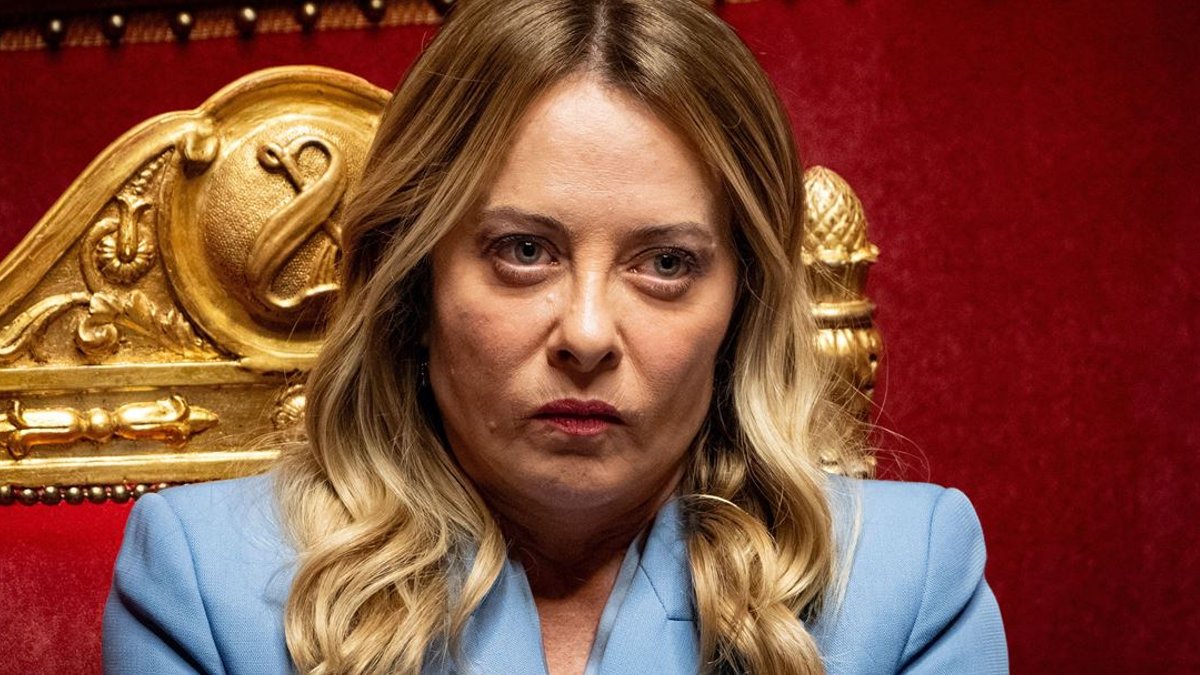
Italy’s Prime Minister Giorgia Meloni has marked the fourth anniversary of her government, making it the longest-serving in Italy’s postwar history. This milestone is significant in a country known for its short-lived governments, with an average duration of just 13 months before Meloni’s tenure.
Meloni‘s government has achieved stability, which is seen as a major accomplishment in itself. Nicola Procaccini, Meloni’s representative in Brussels, notes that the image of Italy has changed, and so has the perception of Meloni herself.
Meloni’s Pragmatism
Analysts argue that while Meloni‘s government has maintained stability, it has not implemented significant structural changes to address Italy’s underlying issues, such as high public debt, low productivity, and a brain drain of young people seeking better opportunities abroad. Over 100,000 Italians emigrated in 2025 alone.
Nicoletta Pirozzi, vice director of the Italian think tank Istituto Affari Internazionali, suggests that the government’s longevity is its main achievement, as it has not introduced substantial reforms. Meloni‘s pragmatism has transformed her from a perceived far-right disruptor to a relatively conventional European leader, but this pragmatism may also be limiting her ability to deliver deeper changes.
Read Also: Canada seeks deeper EU ties without joining
When Meloni took office in 2022, many feared her ascent would threaten democracy in Italy. However, four years on, those fears have proved unfounded, according to Edoardo Bressanelli, a political scientist at the Scuola Superiore Sant’Anna in Pisa.
Economic Performance
The government has made efforts to reduce the budget deficit, which fell from 8.6% of GDP in 2022 to 3.1% in 2025. Procaccini also points to decreasing unemployment, particularly among women, as a positive development. Additionally, Italian government bonds have traded at lower yields, indicating increased financial market confidence in the country.
However, the picture is less positive when considering household purchasing power, which is 8.6% lower than in 2019, according to Italy’s National Statistics Institute. Analysts and political opponents agree that the government has not implemented the necessary economic reforms to restore competitiveness and innovation.
Lorenzo De Sio, professor of political science at the Luiss University in Rome, notes that Italy’s problems are straightforward: low salaries and high prices, particularly in cities like Rome and Milan, where rents are among the least affordable in Europe.
Read Also: Ramp Expands to United Kingdom Market
The government’s approach to migration has been a notable area of pragmatism, with Meloni pushing for greater European solidarity and seeking to change the EU’s migration rules. This strategy led to the Pact on Migration and Asylum, a major overhaul of EU migration rules that entered into force in June this year.
Critics argue that the pact’s accompanying drive to externalize migration management raises human-rights concerns, with inadequate safeguards for migrants. Sandro Gozi, a liberal MEP, suggests that Meloni has turned a national failure into a European one.
Meloni’s final year in office may be her toughest yet, with a referendum on judicial reform failing earlier this year. The government’s plan to create separate professional paths for judges and public prosecutors was intended to modernize Italy’s slow judicial system, but critics feared it would make the judiciary more vulnerable to politicization.
The failure of the referendum has raised questions about Meloni’s ability to accomplish her political project, with key reforms pending, including the Premierato and electoral reform. Her most immediate political test may come from her own right flank, with the rising star of the far right, Roberto Vannacci, potentially challenging her coalition.
Read Also: Paysafe appoints Najuma Atkinson as chief people officer
Procaccini offers insight into Meloni’s thinking, stating that she wants to govern and is aware that an unstable coalition would be detrimental to her goals. It remains to be seen whether her coalition will make room for Vannacci, who embodies the pressure from her right to reclaim ideological territory.
Vannacci has called for restoring ties with Russia and has defended patriarchal views, which could alienate some of Meloni’s centrist voters and reopen fights over her support for sanctions against Russia. As Meloni faces these challenges, her government’s stability and her own political future hang in the balance, with Procaccini noting that she is focused on governing effectively, even if it means making difficult compromises.
The Italian government received over €225 billion under its broader recovery plan, making it challenging to attribute the country’s economic performance entirely to the government’s policies, and with post-pandemic funds set to run out next year, Italy could overtake Greece as the EU country with the highest public debt, according to analysts.


